
Article: Coffee Comes from a Fruit
Coffee Comes from a Fruit
Coffee comes from a fruit.
This is probably the sentence that surprises people the most when introducing them to specialty coffee. Yet, it is also one of the most important.
When we open a bag of coffee, we look at seeds—much like wheat, peanuts, nuts, pecans, and so on.
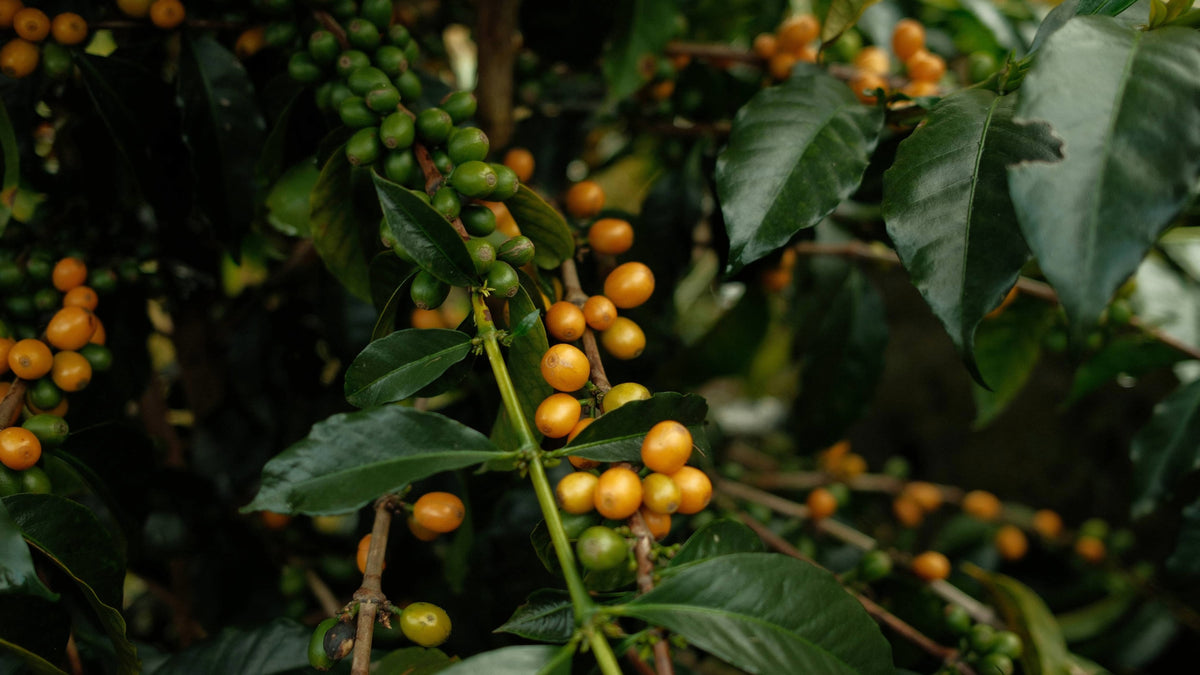
Before being roasted, ground, or extracted as espresso, coffee grows on a shrub called the coffee plant. Over several months, it produces small berries known as drupes. Botanically speaking, a drupe is defined as a fleshy fruit with a pit, like a cherry, apricot, or olive. However, in the coffee world, it is commonly referred to as a "coffee cherry." When ripe, these fruits usually turn red, though some varieties yield yellow, orange, purple, or even pink cherries.
Inside each cherry, you will usually find two seeds: these are what become the coffee we drink. There is, however, an exception: when only a single seed develops inside the fruit, it is called a peaberry (or caracoli).
This simple reality completely transforms how we understand coffee.
Contrary to popular belief, coffee flavors do not originate solely during the roasting process. They begin developing as the fruit grows on the tree, shaped by climate, altitude, soil, plant variety, and harvest timing.
Just like a peach, cherry, or grape, a fruit picked too early will never develop its full aromatic potential, while one picked too late risks spoiling.
This is why specialty coffee producers place so much emphasis on the cherries' ripeness at harvest time. A difference of just a few days can significantly alter the coffee’s final profile.
Understanding that coffee comes from a fruit also makes it easier to explain certain flavor notes to customers. Notes of strawberry, peach, pecan, or citrus are not added flavorings: they are the direct result of the coffee plant's genetics, the terroir, and the hard work done at the farm.
Key Takeaways:
Coffee is a seed
What we call a "bean" is actually a seed found inside the coffee cherry.
Flavor begins long before roasting.
Terroir, altitude, variety, climate, and fruit ripeness shape a large portion of the flavors that end up in your cup.