
L'histoire du café
Reading time: 7 minutes
Today, coffee is cultivated in dozens of countries and drunk almost everywhere in the world. Behind this now commonplace daily routine lies a centuries-old history.
This story begins in Africa, crosses the Arabian Peninsula, accompanies the expansion of European empires, and deeply transforms regions across Asia and the Americas.
It is not always an easy story to tell. While coffee today is associated with conviviality, coffee shops, and pleasure, its global rise is also intimately tied to colonialism, slavery, and the exploitation of populations.
Origins: Ethiopia and Yemen
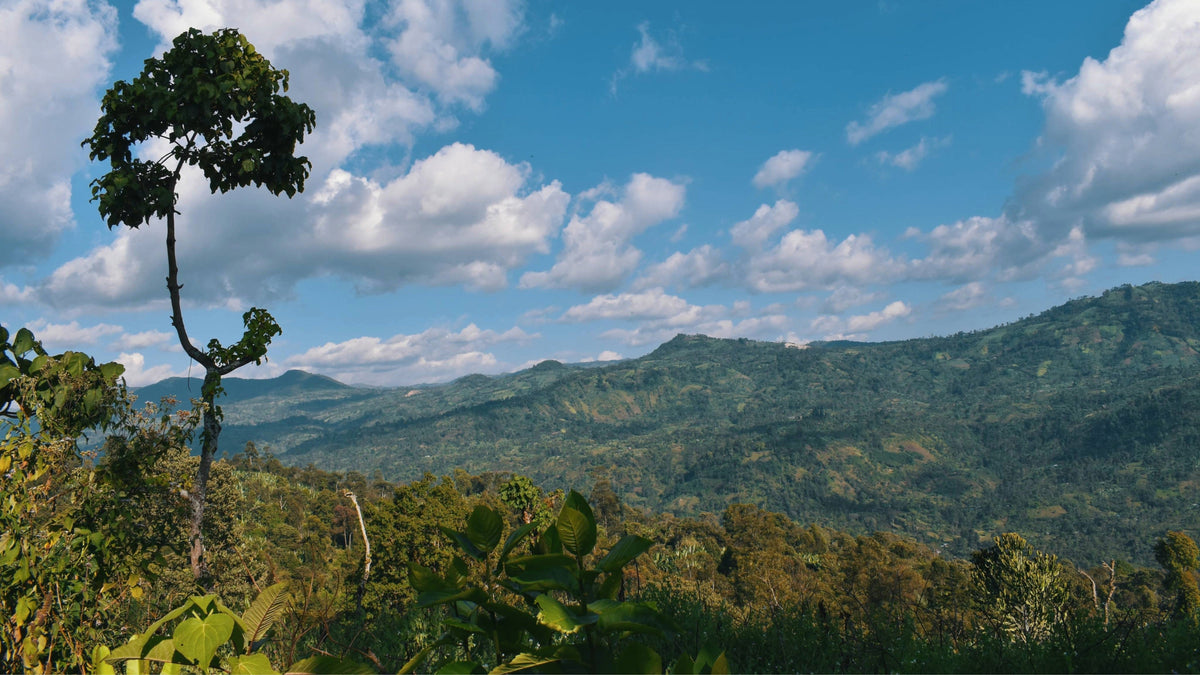
The botanical origin of Coffea arabica lies in the highlands of East Africa, primarily in present-day Ethiopia. This is where one of coffee's most famous legends originates: the story of Kaldi, an Ethiopian goat herder who noticed his goats became unusually energetic after eating the red berries of a coffee tree. It is a charming story, but there is no evidence to prove that Kaldi ever actually existed.
The earliest solid historical evidence of coffee consumption as a beverage appears much later, in the 15th century, in Yemen on the Arabian Peninsula, across from East Africa. Sufi communities notably used it to stay awake during long nocturnal prayer sessions. Coffee then began to be cultivated and traded on a larger scale. The port of Mocha, in Yemen along the Red Sea, became one of the major hubs of the global coffee trade.
Coffee Conquers the Muslim World
In the 16th century, coffee consumption spread throughout the major cities of the Middle East: Cairo, Damascus, Istanbul, and beyond.
New establishments emerged: coffeehouses, or qahveh khaneh. People gathered there to converse, play games, listen to music, exchange information, and occasionally discuss politics. This new form of sociability frequently alarmed the authorities, and during various periods, certain rulers even attempted to ban coffeehouses. Coffee had become a true cultural phenomenon.
Europe Discovers Coffee
Starting in the 17th century, European merchants gradually brought coffee back from Middle Eastern ports. Venice and Marseille were among its main gateways into Europe, after which it quickly reached royal courts and capital cities across the continent.
European coffeehouses also became gathering places for social interaction, commerce, and the exchange of ideas. However, Europe was consuming coffee without controlling its production, as the trade remained largely in the hands of the Ottoman Empire. In an era dominated by the expansion of European colonial powers, this situation would not last.
Coffee Becomes an Imperial Affair
European powers progressively sought to wrest coffee control away from Ottoman dominance. The Dutch successfully introduced coffee cultivation to their colonized territories in Asia, notably on the island of Java in modern-day Indonesia.
The French followed suit by developing coffee cultivation in their own colonies, particularly on Île Bourbon (now Réunion Island), before the plants crossed the Atlantic.
By the 18th century, coffee was taking root on a massive scale across the Caribbean and Latin America. This expansion marked a major turning point: coffee production became fully integrated into the colonial plantation system, relying overwhelmingly on forced labor.
Coffee, Colonization, and Slavery
To satisfy the booming demand of European consumers, production had to scale rapidly. While colonial powers held tropical lands perfectly suited for coffee, they required a massive labor force.
Across several territories in the Americas and the Caribbean, this labor force consisted of enslaved African men, women, and children.
Coffee joined sugar, cotton, cocoa, tobacco, and other commodities at the heart of a transatlantic economic system built on human exploitation. This era played a direct role in elevating these goods into mass consumer products—at the cost of the forced labor of millions of people.
Saint-Domingue: Coffee, Slavery, and Revolution
By the late 18th century, Saint-Domingue (present-day Haiti), then under French rule, was one of the wealthiest colonial territories in the world. Its economy was driven by sugar cane, coffee, and hundreds of thousands of enslaved people working the plantations under brutal conditions.
In 1791, a massive insurrection erupted as enslaved populations revolted against colonial rule. After more than a decade of war, political upheaval, and foreign interventions, Haiti proclaimed its independence in 1804.
This was a watershed moment in world history: a revolution led by individuals who had endured the horrific conditions of slavery resulted in the creation of an independent state. The revolution also disrupted the international coffee trade; one of the world's primary producers was removed from the colonial system supplying Europe, forcing production to shift elsewhere.
Brazil Becomes the Coffee Giant
In the 19th century, the epicenter of global production shifted to Brazil. Plantations expanded dramatically, and once again, this rapid growth relied heavily on the labor of enslaved Africans and their descendants. Brazil received millions of forcibly deported Africans during the transatlantic slave trade and was the last country in the Americas to officially abolish slavery, in 1888.
For nearly a century, coffee drove a massive transformation of the Brazilian economy. Infrastructure was constructed to transport coffee from rural growing regions to international ports.
This rapid expansion also reshaped the natural landscape. To meet global demand, vast expanses of forest were cleared to make way for agriculture. The growth of the Brazilian coffee industry went hand-in-hand with severe deforestation as coffee became a strategic global commodity.
Global Power Dynamics
As coffee became accessible to the broader public across Europe and North America, a distinct geography of consumption took shape.
Coffee was grown in tropical regions, while the majority of its consumption and commercial value concentrated in the economic powers of the Global North. This structure did not disappear with the abolition of slavery or the end of colonial empires.
Even today, fundamental questions persist within the coffee economy regarding land ownership, working conditions, fair prices paid to farmers and agricultural workers, and how value is distributed along the supply chain.
Where Does Specialty Coffee Fit In?
Concepts such as traceability, direct trade, fair producer prices, quality, and transparency did not emerge by accident. They arose as a response to an industry built over centuries on deeply unequal economic relationships.
The emergence of the specialty coffee movement in the 1970s aimed to foster a different approach—one built on valuing quality and sustainable agricultural practices, with the goal of better recognizing producers' work and promoting fairer compensation.
Understanding the history of coffee reveals that behind a routine daily ritual lie complex human, economic, and political stories. Coffee's past is deeply interwoven with the history of modern society, and understanding it offers vital context for the realities and contradictions of today's coffee industry.