
Article: « Un café, s'il vous plaît »
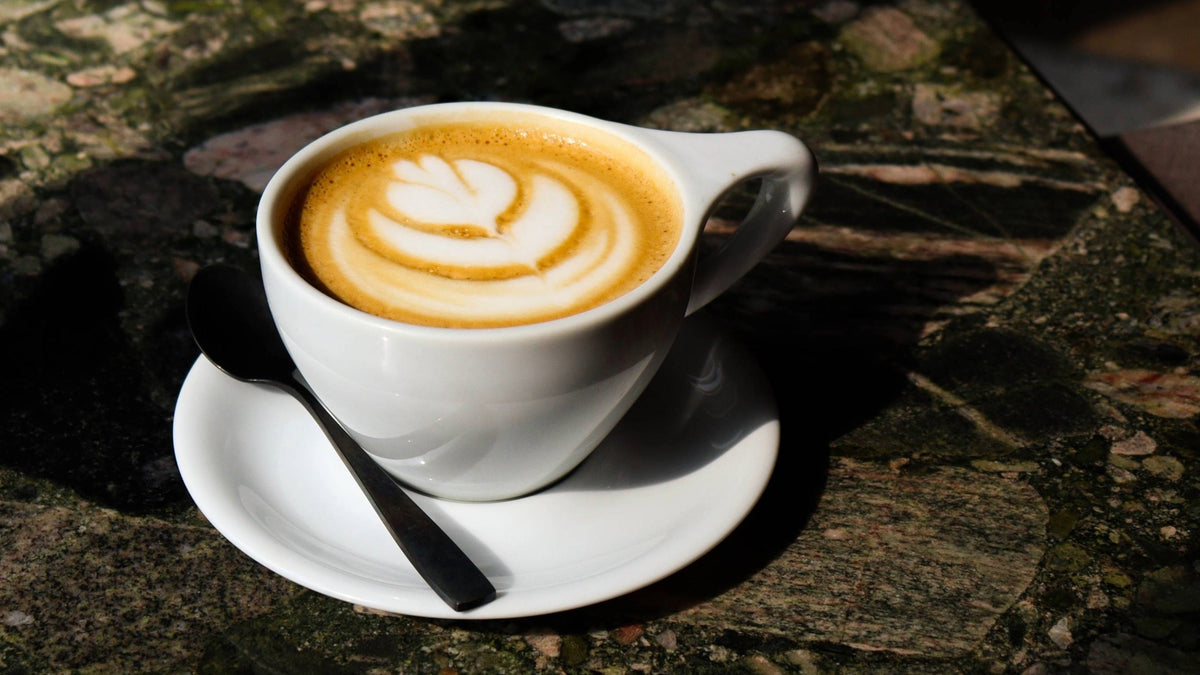
« Un café, s'il vous plaît »
Reading time: 6 minutes
For many customers, asking for a “coffee” naturally brings to mind a cup of drip coffee. Depending on where you are, you then specify the size, whether you want milk, cream, or sugar, and often walk out with your coffee in hand. Nothing particularly surprising there.
Now, take that exact same order and step inside a café in Rome. “Hello, a coffee please.” The server doesn’t understand because they only speak Italian, so you rephrase: “Buongiorno, un caffè, per favore.” Moments later, a cup is set down in front of you… an espresso. Yet nobody made a mistake; you simply entered a different coffee culture. Because while coffee has become a global drink, the way we consume it remains deeply local. Volume, strength, milk, sugar, time of day, vocabulary, and even the time spent drinking it: every society has developed its own codes.
In Quebec: Coffee as an everyday drink
In Quebec, coffee culture is heavily influenced by North American habits. Drip coffee has historically held an important place: a relatively long drink, served in a generous mug, and often with free refills.
On top of that comes a habit that has become completely ordinary: coffee to go. You grab a coffee on your way to work, in the car, on the subway, or between appointments. The container and the size are an integral part of how we think about the beverage. Small, medium, or large—tied directly to the length of the commute. Coffee is highly personalized; even a simple order requires a brief exchange with the barista to specify if it's to go, the drink size, hot or iced, the type of milk, and whether it's sweetened.
These habits feel completely natural when you live here, but they are much less common elsewhere.
In France: Your “coffee” just shrank
In a bistro or a brasserie, simply asking for “a coffee” generally gets you an espresso, which acts as the implicit default; finding a restaurant that serves drip coffee is nearly mission impossible.
To get something closer to Quebec habits, you have to be specific. A latte or cappuccino will systematically be offered in a single size with cow's milk, though some international chains do allow size customization.
Traditional French coffee is often an espresso or an espresso diluted with hot water (much smaller than an Americano) enjoyed at lunch, after a meal, during a break, or quickly standing at the counter. The cultural reference points result in two completely different drinks.
In Italy, the rules change again
Continuing the journey, ordering a caffè in Italy again means ordering an espresso. But the difference isn't just about the recipe; coffee is tied to very specific social customs. An espresso can be consumed quickly, often standing at the counter. A cappuccino, on the other hand, is strongly associated with mornings and breakfast.
You can, of course, order a cappuccino after dinner—nobody is going to stop you. However, you risk bewildered looks from Italians wondering why on earth you’re doing that. It's also worth noting that drip coffee is rare outside the home, where the Moka pot remains the king of domestic brewing.
Here, everything revolves around espresso. Understanding a coffee culture means knowing what to drink, but also when and how to drink it.
Scandinavia: Filter coffee becomes a way of life
Heading to Northern Europe, in countries like Finland, Sweden, or Norway, drip coffee holds a particularly special place.
The format feels more familiar, but the context changes. In Sweden, for example, the concept of fika refers to a genuine social break during the workday centered around coffee, usually accompanied by something to eat. You pause, grab a coffee, and chat. Coffee is no longer just a drink; it becomes an invitation to interrupt the day and share a moment.
This strong filter coffee culture has also driven the growth of a specialty coffee movement that favors lighter roasts and delicate flavor profiles.
Middle East, Balkans, Turkey, and Greece: Forget the filter
Time to shift perspectives entirely. In the tradition of “Turkish coffee,” the beans are ground extremely fine and brewed with water in a small pot called a cezve. The grounds are served directly with the drink and gradually settle at the bottom of the cup.
Yet the difference goes far beyond the brewing method. “Turkish coffee” is historically rooted in hospitality, gatherings, and various social and family traditions. Depending on the country and culture, recipes might include sugar, honey, spices, or even chili pepper cooked right in.
The coffee itself is only one part of the experience. How it is prepared and shared matters just as much as the drink itself.
In Ethiopia, having a coffee takes time
In the botanical birthplace of Coffea arabica, coffee far transcends the simple act of drinking a beverage. The Ethiopian coffee ceremony is a true gesture of hospitality and community that can stretch over several hours.
Traditionally, green coffee beans are roasted on the spot—often in a flat pan—before being presented to guests so they can appreciate the aromas. They are then ground and brewed in a jebena, a traditional long-necked clay pot.
The coffee is enjoyed over three successive rounds, traditionally called abol, tona, and baraka. During each round, guests remain gathered, talking and taking the time to share the moment. The ceremony becomes as much a social ritual as a method of coffee preparation.
Then coffee shops began blending cultures
Today, there are countless coffee cultures—including Vietnamese coffee culture, which has expanded globally in recent years with recipes vastly different from Western habits.
With the rise of Specialty Coffee Shops, borders have blurred. A shop can serve an espresso born out of Italian tradition, made with Ethiopian beans roasted using Scandinavian techniques, to craft a flat white popularized in Australia and New Zealand.
The modern coffee shop has become a meeting point for different coffee cultures, where a single menu features drinks named from all over the world: batch brew, pour-over, phin, cezve/ibrik, espresso, americano, cortado, cappuccino, flat white, latte...